5-ALARM TASK FORCE CORP.
  • Home
  • Podcast
    • Podcast Sponsors >
      • Insight Training Schedule
      • The Firehouse Tribune
    • Guests
  • DONATE
    • HELP ME/US
    • Scroll of Honor >
      • Corporate Donors
  • Blog
  • Training & Education
    • Responder Safety Institute
  • Webinars & Conferences
    • 2018 Great Florida Fire School
    • The Great Florida Fire School 2017 >
      • Great Florida Fire School Videos
  • Books
  • News
    • Promote at a Conference
    • Firefighter Cancer Initiative
  • About
    • MORE >
      • FL COVID-19 INFO
      • More Firefighting Podcasts
      • NESTORBARS
      • CRACKYL Media, INC
      • Privacy Policy
    • Sign Up
    • Contact
    • LINKS FOR YOU

MEET OUR GUESTS

We are honored that our guests have shared time from busy schedules to join us on "5-Alarm Task Force." Some of them provide services or products that might be of interest to you. Interested in contacting a guest? Look for their link in their logo or underscored and highlighted in their text!
​

All postings here are completely gratis and I receive no remuneration from them, whatsoever.​

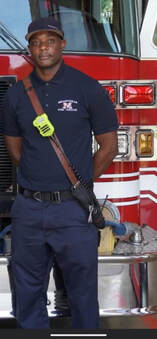
FF Danny Beauvais

9/21/2023

4 Comments

 
Picture
Started as a volunteer in Rockland County, New York with Rockland Hook & Ladder Department 17 in Spring Valley. I was there for 2 years before moving to North Carolina due to September 11th affecting my dads limo business. Once I moved. I found the closest volunteer Department near my house and joined. I was there over 10 years where I climbed up the ranks to Assistant Chief Of Training. I was let go after many years of dedication and was very active within the Department.

However, during my tenure as a volunteer there I applied at a career FD named Mooresville Fire Department. I’ve been there since 2007 (16 years) and currently hold the rank of Senior Firefighter (Relief driver) where I ride Tower Ladder 6. I’ve always cared about the fire service but ran into a wall where I felt like mediocrity and complacency was running rampant to the point where I was contemplating leaving. Luckily I found two podcasts that forever changed my mindset and showed me I wasn’t the only person who feels how I do regarding the fire service.

After attending my first mini fire conference, surrounded by like minded individuals, it sparked a fire in me letting myself know it’s OK how I feel about the job and wanting to train and do it correctly. So I started my own podcast, "Student of the Game," (available on all major podcast platforms and YouTube) that has generated great feedback but has also put a target on my back. I just want people to know it’s truly OK to love this profession and we need to take it seriously along with setting the tone for success with upcoming future generation Firefighters. 

4 Comments
sosyal medya uzmanı link
2/2/2025 07:58:58 am

This is a very good article. It is very difficult to come across articles like this these days. Congratulations.

Reply
iç giyim ürünleri link
4/3/2025 07:45:18 am

Thanks for this valuable article.

Reply
tophatters.co link
4/1/2026 09:17:14 am

Your story is powerful—and more importantly, it’s necessary.

There’s a raw honesty in what you shared that a lot of people in the fire service feel but never say out loud. From your early days volunteering in Rockland County, to rebuilding your footing in North Carolina, to dedicating over a decade climbing the ranks and then being let go—it’s clear this isn’t just something you *did*. This is something you’ve *lived*. And that kind of investment doesn’t just disappear when circumstances change. It shapes how you see the job, the culture, and the people in it.

What stands out most is that despite everything—setbacks, frustration, and even being pushed out—you didn’t lose your love for the fire service. If anything, it sharpened your perspective.

That “wall” you hit? That feeling of mediocrity and complacency creeping in? That’s real. And it’s more widespread than many departments are willing to admit. The fire service has always had this tension between tradition and progression. On one hand, tradition builds identity and pride. On the other, it can sometimes become a shield for stagnation. When “this is how we’ve always done it” replaces “how can we do this better,” that’s where the danger begins—not just operationally, but culturally.

What you experienced wasn’t burnout from doing too much—it was frustration from seeing too little being done *right*.

And then something shifted.

You found voices—through podcasts and conferences—that validated what you were feeling. That’s huge. Because isolation is one of the most dangerous places for someone who cares deeply about their craft. When you’re surrounded by complacency, you start questioning yourself:
“Am I the problem?”
“Am I taking this too seriously?”
“Why doesn’t anyone else care like this?”

But then you realize—you’re not alone. There’s an entire group of firefighters out there who believe this job deserves more. More training. More pride. More accountability. More purpose.

That spark you felt at that first conference? That wasn’t just motivation. That was alignment.

And instead of keeping that energy to yourself, you did something that takes real courage—you created.

Starting your podcast, *Student of the Game*, is more than just a platform. It’s a statement. It says:
“I’m not okay with average.”
“I’m not okay with checking boxes.”
“I’m not okay with treating this job like it’s just another paycheck.”

You’re advocating for ownership of the craft. And that can make people uncomfortable.

Let’s be real—when you challenge complacency, you *will* become a target. Not because you’re wrong, but because you’re disrupting comfort. Growth requires effort, and not everyone is willing to put that in. So when someone like you steps up and says, “We can be better,” it forces others to confront where they stand.

Some will be inspired.
Others will resist.

That’s the cost of leadership—even when you don’t hold a formal title.

But here’s the truth: the fire service doesn’t move forward because of the majority. It moves forward because of the few who refuse to settle.

The ones who train when no one’s watching.
The ones who ask questions others avoid.
The ones who take pride in doing the job the *right* way, even when it’s harder.

You’re helping shape that mindset—not just through your actions, but through your voice.

And that matters more than you might realize.

Because the next generation is watching. They’re listening. They’re looking for examples of what this job is *supposed* to mean. If all they see is complacency, they’ll adopt it. But if they see passion, discipline, and purpose—they’ll rise to it.

Your message—that it’s okay to love this profession and take it seriously—is something the fire service desperately needs to hear more often.

Loving the job isn’t weakness.
Caring deeply isn’t overdoing it.
Wanting to train harder and perform better isn’t extreme—it’s responsibility.

This job demands excellence. Not occasionally, not when it’s convenient—but consistently. Because when the moment comes, there are no second chances.

And the fact that you’re willing to stand for that—even when it puts a target on your back—says everything about the kind of firefighter you are.

Keep going.

Keep speaking.

Keep pushing.

Because even if not everyone says it out loud, there are more people out there who need to hear what you’re saying than there are people trying to silence it.

You’re not just a “student of the game.”

You&rsquo

Reply
joyfulpink.com link
4/1/2026 09:17:52 am

There’s something about your story that cuts deeper than just a timeline of service—it reveals what it actually *means* to care about the fire service in a way that goes beyond rank, years, or titles.

You didn’t just pass through departments—you invested in them. From your early volunteer days in Rockland County to rebuilding your path in North Carolina, you kept showing up. Not because it was easy, but because it mattered. And that kind of consistency over years—especially through change, uncertainty, and even being let go—is something most people will never fully understand unless they’ve lived it.

What really stands out is the turning point you described—the moment where passion collided with frustration.

That feeling of hitting a wall in the firehouse is something that doesn’t get talked about enough. It’s not about laziness. It’s not about lack of opportunity. It’s about realizing that the job you take seriously isn’t always being treated with the same level of urgency by everyone around you. And that disconnect can be exhausting.

Because when you care deeply, you notice everything:

* The shortcuts that get normalized
* The training that becomes routine instead of purposeful
* The mindset that shifts from pride to comfort

And the hardest part? Feeling like you’re the only one who sees it.

That’s where a lot of good firefighters either quiet down… or walk away.

But you didn’t.

Instead, you found something that reignited you—connection. Hearing other voices that shared your mindset reminded you that the problem wasn’t your expectations. The problem was the environment you were surrounded by. And that distinction changes everything.

That first conference you attended wasn’t just an event—it was proof. Proof that the fire service still has people who care about doing the job right. People who train with intent. People who refuse to accept “good enough” when lives are on the line.

And from that moment, you made a choice: not just to stay in the fire service, but to actively contribute to the culture you believe it should have.

Starting *Student of the Game* is a perfect reflection of that mindset. The name alone says it all—this job isn’t something you ever “arrive” at. You don’t master it and stop learning. You stay a student. You stay curious. You stay sharp.

That’s the difference between someone who wears the uniform and someone who honors it.

But with that choice comes friction.

When you speak openly about standards, training, and accountability, you’re not just sharing ideas—you’re holding up a mirror. And not everyone is ready to look into it. Some will take it personally. Some will feel threatened. Some will try to dismiss or discredit what you’re doing.

Not because you’re wrong—but because you’re exposing a gap.

And here’s the reality: culture change is never comfortable.

The fire service, like any tight-knit profession, has unwritten rules. Don’t rock the boat. Don’t question too much. Stay in your lane. But those rules don’t build better firefighters—they preserve the status quo.

What you’re doing challenges that.

You’re saying:

* Training should mean something
* Pride in the job should be visible
* Standards should be upheld, not lowered
* Loving the job should be the norm, not the exception

That’s not radical—that’s necessary.

And while it may feel like it’s putting a target on your back, it’s also doing something far more important: it’s giving others permission to feel the same way.

There are firefighters out there right now—sitting in day rooms, riding rigs, going through the motions—who feel exactly what you felt. They care, but they’re surrounded by indifference. They want to improve, but they don’t have support. They’re questioning whether they’re the problem.

And then they hear something like your podcast.

And suddenly, they realize:
“I’m not alone.”

That moment matters.

Because it keeps good firefighters from becoming disengaged. It keeps motivated people from burning out. It creates a ripple effect where one voice turns into many.

That’s how culture actually changes—not through policy, but through people.

Your journey proves something important: setbacks don’t define your impact. Being let go from a volunteer department didn’t erase your contribution—it refined your purpose. It pushed you toward something bigger than just showing up for calls. It pushed you toward influencing how the job is viewed and performed.

And that’s a different level of service.

At the end of the day, the fire service doesn’t need more people going through the motions. It needs more people who care

Reply


Leave a Reply.

    Author

    Steve Greene is the Creator & Host of "5-Alarm Task Force," both the audio podcast and video program. Steve is also the founder and president of 5-Alarm Task Force Corp., a nonprofit dedicated to assisting firefighters in dire need.

    Archives

    September 2023
    August 2023
    April 2023
    February 2023
    January 2023
    November 2022
    May 2022
    March 2022
    February 2022
    January 2022
    November 2021
    October 2021
    September 2021
    June 2021
    May 2021
    March 2021
    February 2021
    December 2020

    Categories

    All
    Aaron Zamzow
    Andi Clark
    Andrew Cunningham
    Asst Chief Tom Marchiano
    Battalion Chief Jacob Johnson
    Battalion Chief John Hayowyk
    Bill Dungey
    Bradley R. Davidson
    Capt. James "JP" Childers
    Capt. James Kovacs
    Capt. Jim Moss
    Capt. John Lovato Jr
    Capt. Mike Daley
    Capt. Sean Mitchell
    Chief Arjuna George
    Chief Brandon Fletcher
    Chief Bruce Varner
    Chief Charles Werner
    Chief Dan Kerrigan
    Chief Dennis Rubin
    Chief Gary Ludwig
    Chief John S. Butler
    Chief John Vance
    Chief Justin Bailey
    Chief Marc Bashoor
    Chief Paul V. Jockimo
    Commissioner Adam Thiel
    Commissioner Jared Renshaw
    Dennis Fox
    Dep. Chief Steve Prziborowski
    Depury Chief Dave Robertson
    Diane Cotter
    Dustin Lambert PhD
    E.J. Henninger
    FF Danny Beauvais
    Gamaliel Baer
    HAAS Alert
    Jason Burns
    Jessica Picket
    Jim Burneka
    JR
    Kelly Walsh
    Kevin Roche
    Lt. Chris Kessinger
    Mynda Ohs
    Nicholas Higgins
    Peter Matthews - FIREHOUSE
    PhD
    Project Blue Card-BShifter
    Ryan Johnston
    Steve Hirsch - NVFC Chair
    The EFO - Part I
    Todd J LeDuc
    Tonya Herbert

    RSS Feed

Site powered by Weebly. Managed by Podomatic
  • Home
  • Podcast
    • Podcast Sponsors >
      • Insight Training Schedule
      • The Firehouse Tribune
    • Guests
  • DONATE
    • HELP ME/US
    • Scroll of Honor >
      • Corporate Donors
  • Blog
  • Training & Education
    • Responder Safety Institute
  • Webinars & Conferences
    • 2018 Great Florida Fire School
    • The Great Florida Fire School 2017 >
      • Great Florida Fire School Videos
  • Books
  • News
    • Promote at a Conference
    • Firefighter Cancer Initiative
  • About
    • MORE >
      • FL COVID-19 INFO
      • More Firefighting Podcasts
      • NESTORBARS
      • CRACKYL Media, INC
      • Privacy Policy
    • Sign Up
    • Contact
    • LINKS FOR YOU